How to Choose the Right FR Coverall Size and Fit
A poorly fitting coverall can compromise safety. Sizing, rise, chest, inseam — what to measure and how to read the chart.
August 10, 2025 · 5 min read · by Summit Work Apparel®
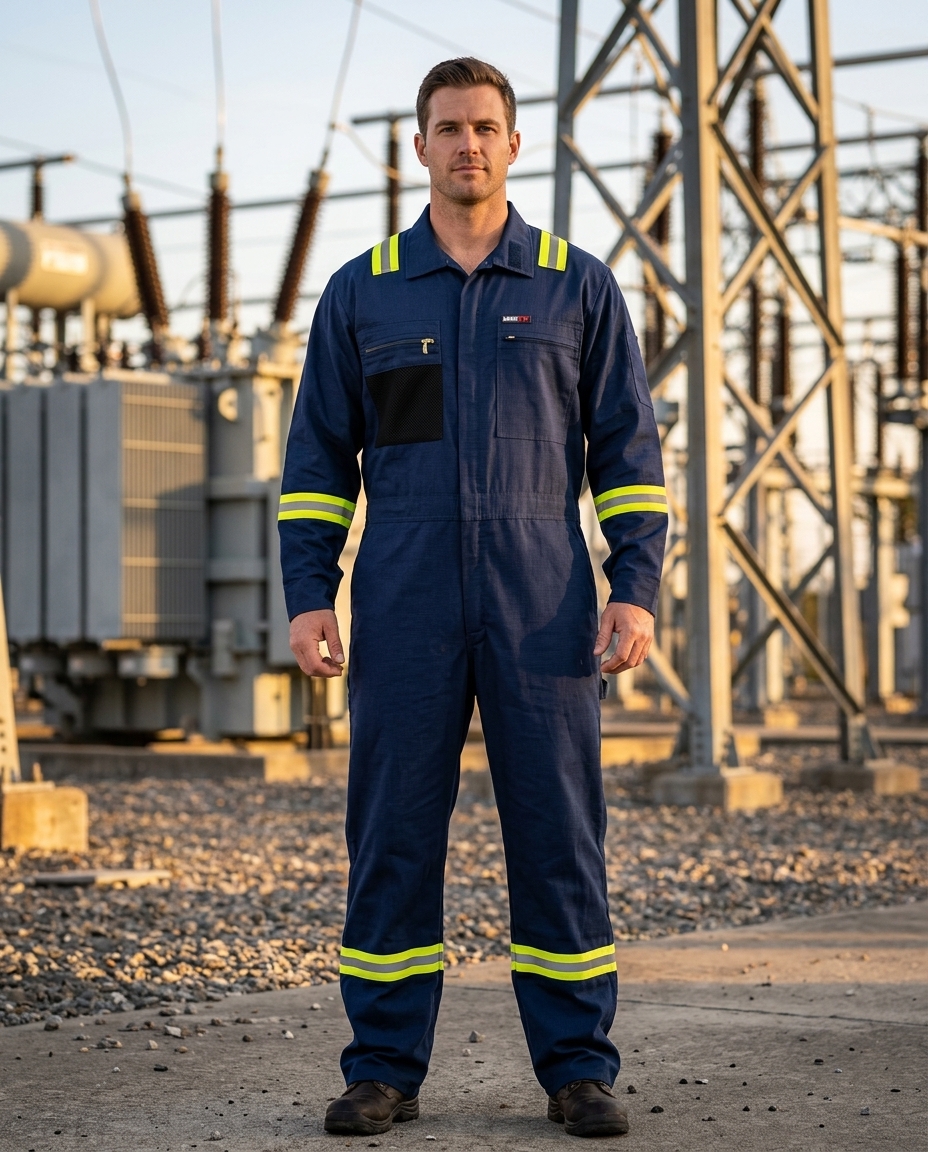
A coverall that fits poorly can compromise safety. If it is too tight at the thigh, it restricts movement and can rip at the seam under stress. If it is too loose at the cuff, it can drag across hot surfaces and collect contamination. Fit is not a vanity thing in FR.
What to measure
You need three numbers:
- Chest — measured across the fullest part, under the arms, with the measuring tape parallel to the floor.
- Inseam — from crotch to the bottom of the ankle, on a pant that fits well today.
- Height — used to choose between Standard and Tall fits.
Reading the Summit coverall size chart
Our coveralls are sized by chest (42–66). Pick the size where your chest measurement sits in the middle of the range — that gives you room to layer a base layer underneath in winter without binding at the shoulder.
For inseam, Standard covers a 30" inseam (most workers up to 5'10"); Tall covers 33" inseam (typically 5'11" and up). The Tall cut adds 1.1× the standard price tier, which is the only price differential between the two.
Common fit pitfalls
- The "I always buy this size" trap. Body changes. Re-measure annually — particularly after a long layoff.
- Choosing for layering in summer. Pick for the lightest expected base layer. You can always add a long-sleeve base underneath; you cannot add chest room to a too-small coverall.
- Ignoring rise. A coverall that fits in the chest but pulls at the crotch will split the seam the first time the worker climbs a ladder. Rise is the silent fit killer.
Try before you commit
We keep a small sample stock at our Sugar Land office for program walk-ins. If you are purchasing for a crew of any size, we will happily do an on-site fitting visit for the Houston/Gulf Coast region or ship sample sizes for remote programs.